



(Essay by Nancy Kay Turner at bottom.)
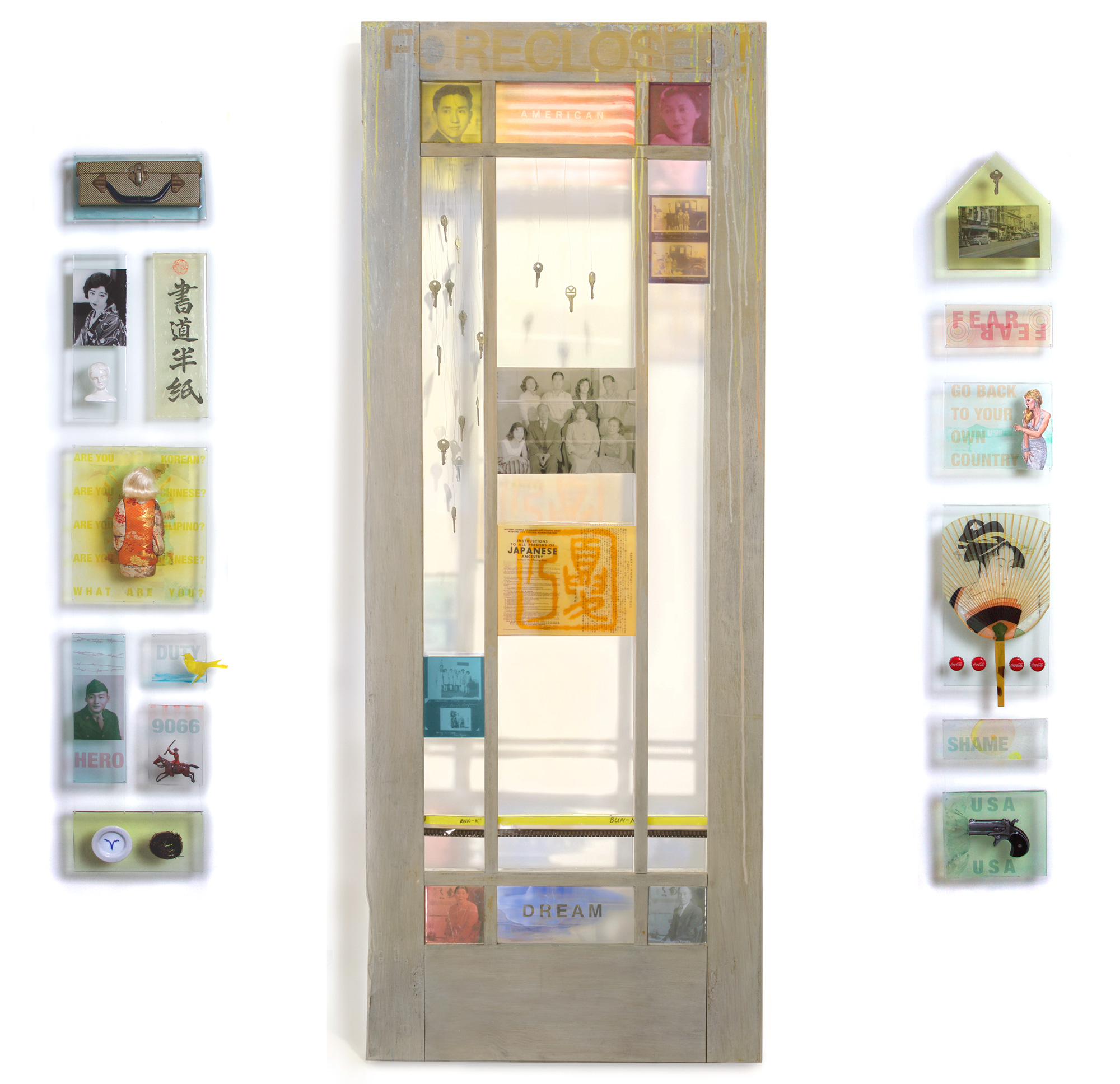
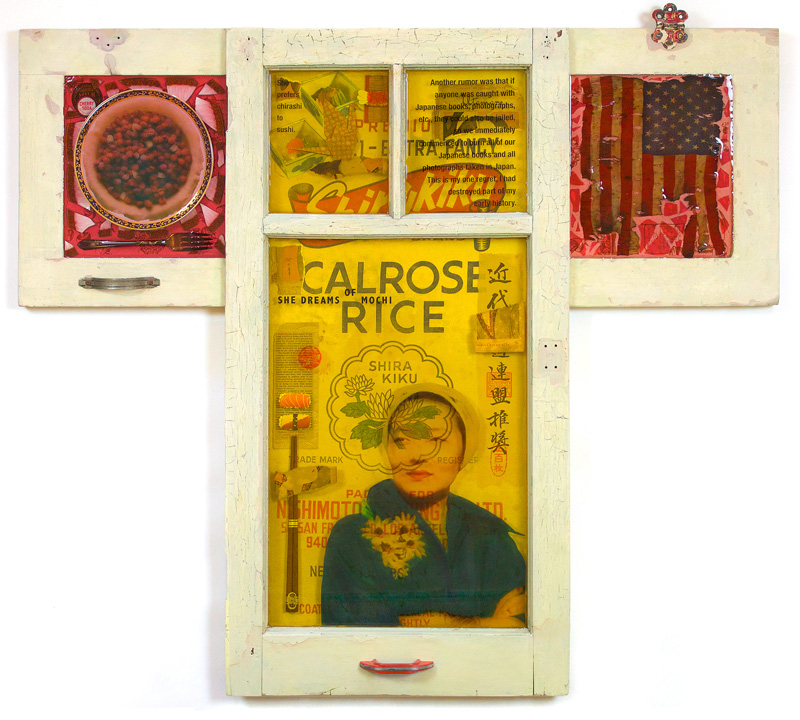
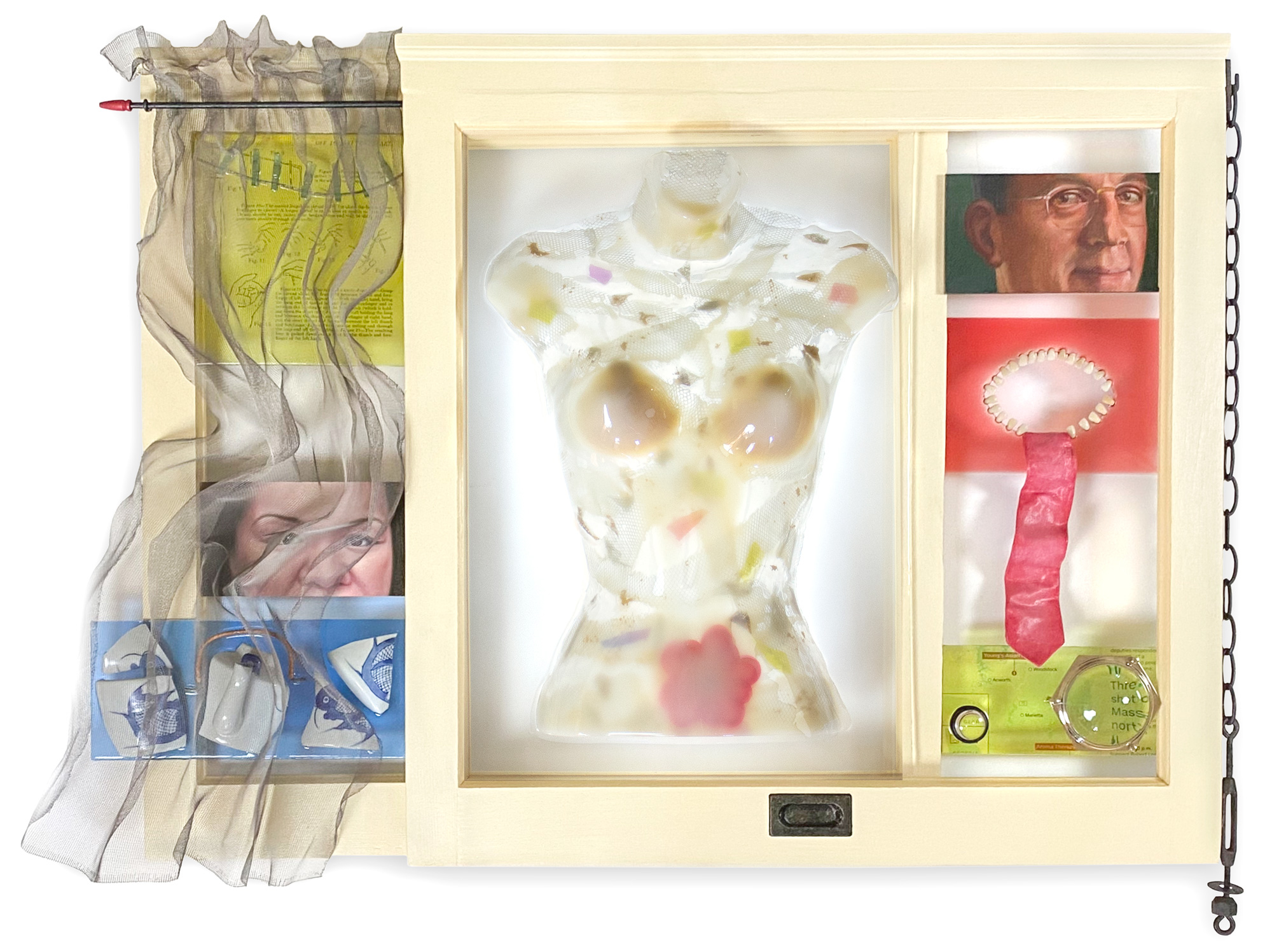
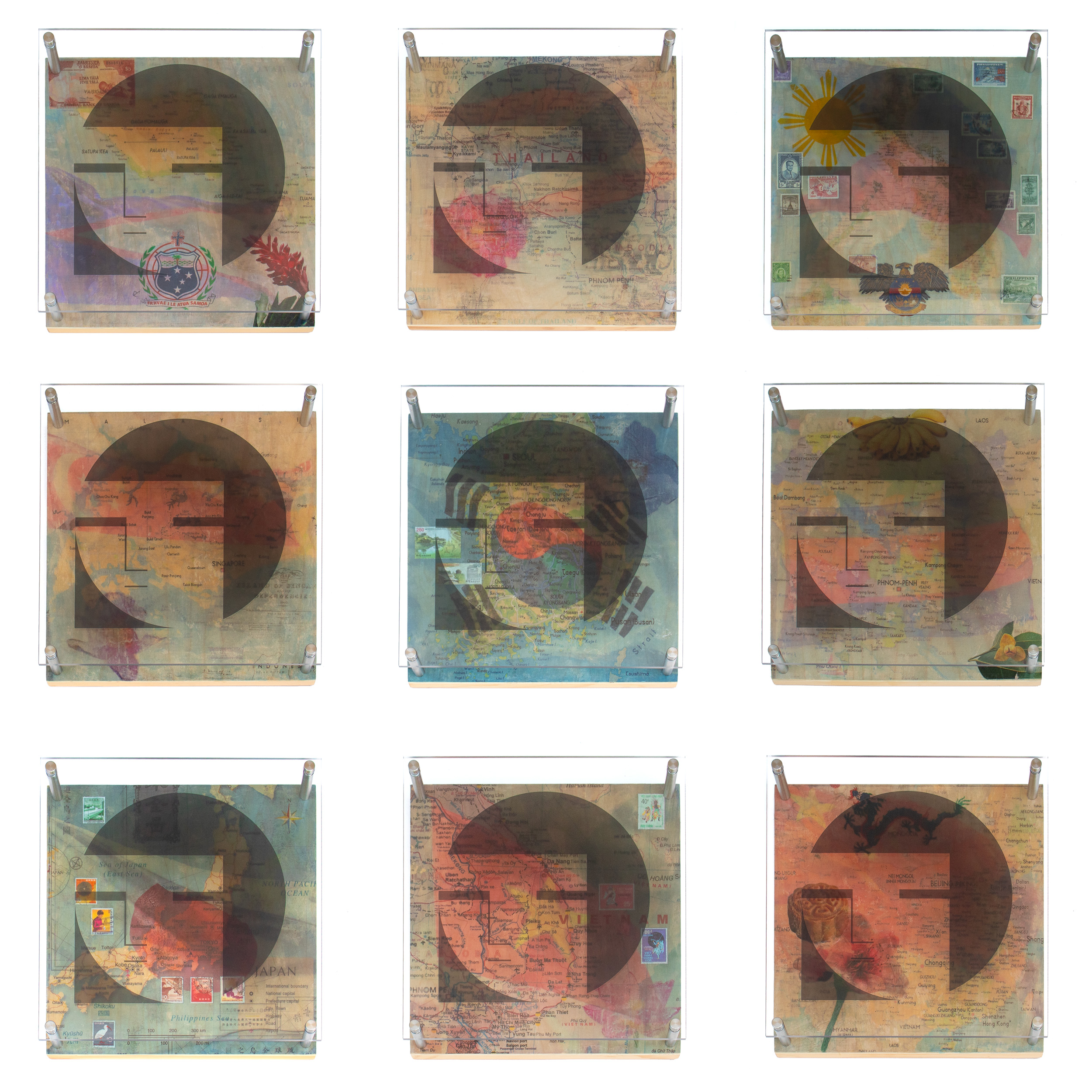
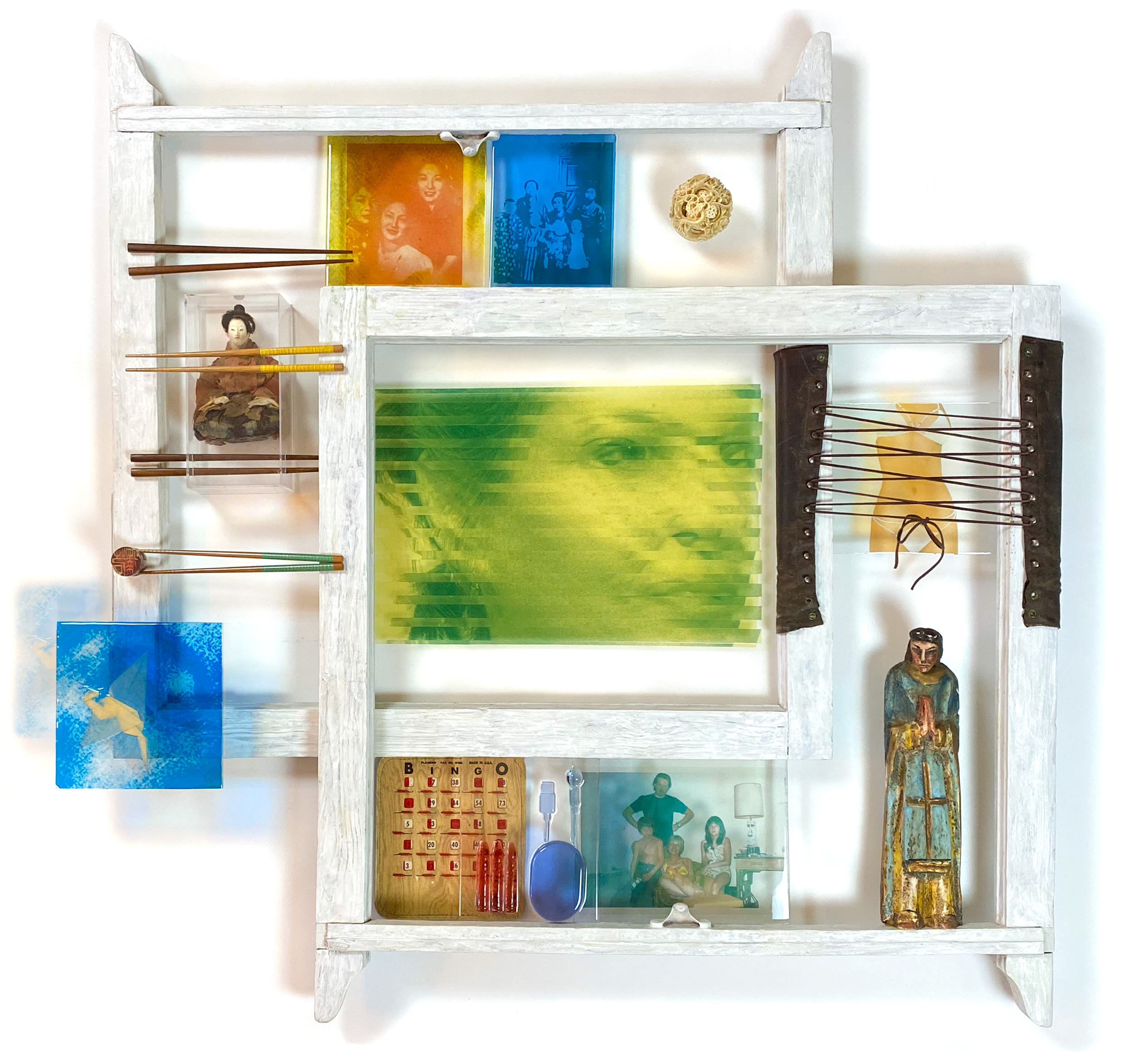
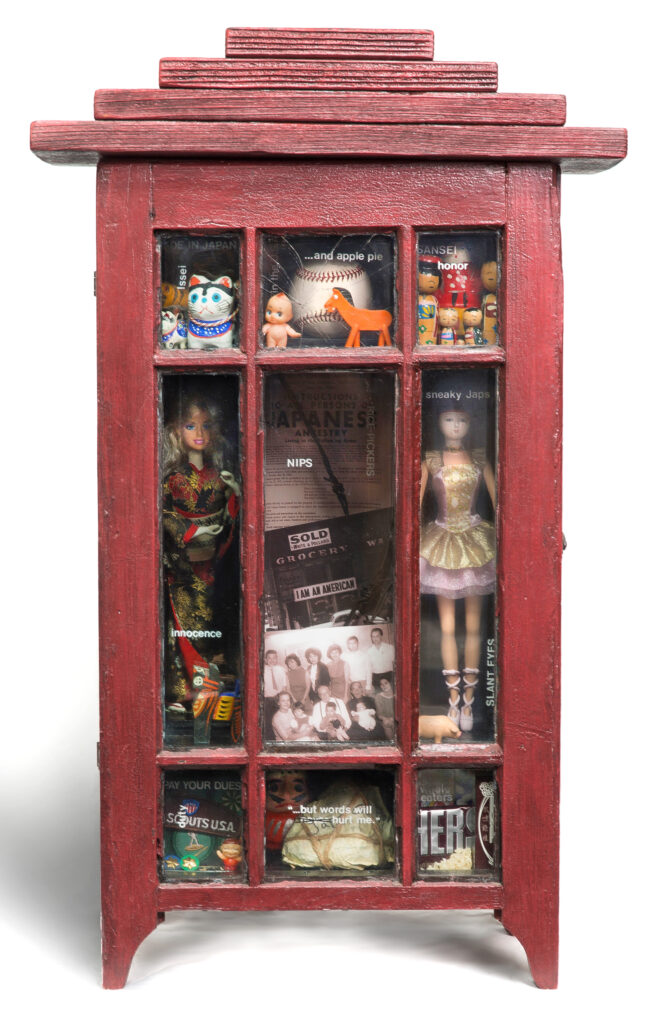
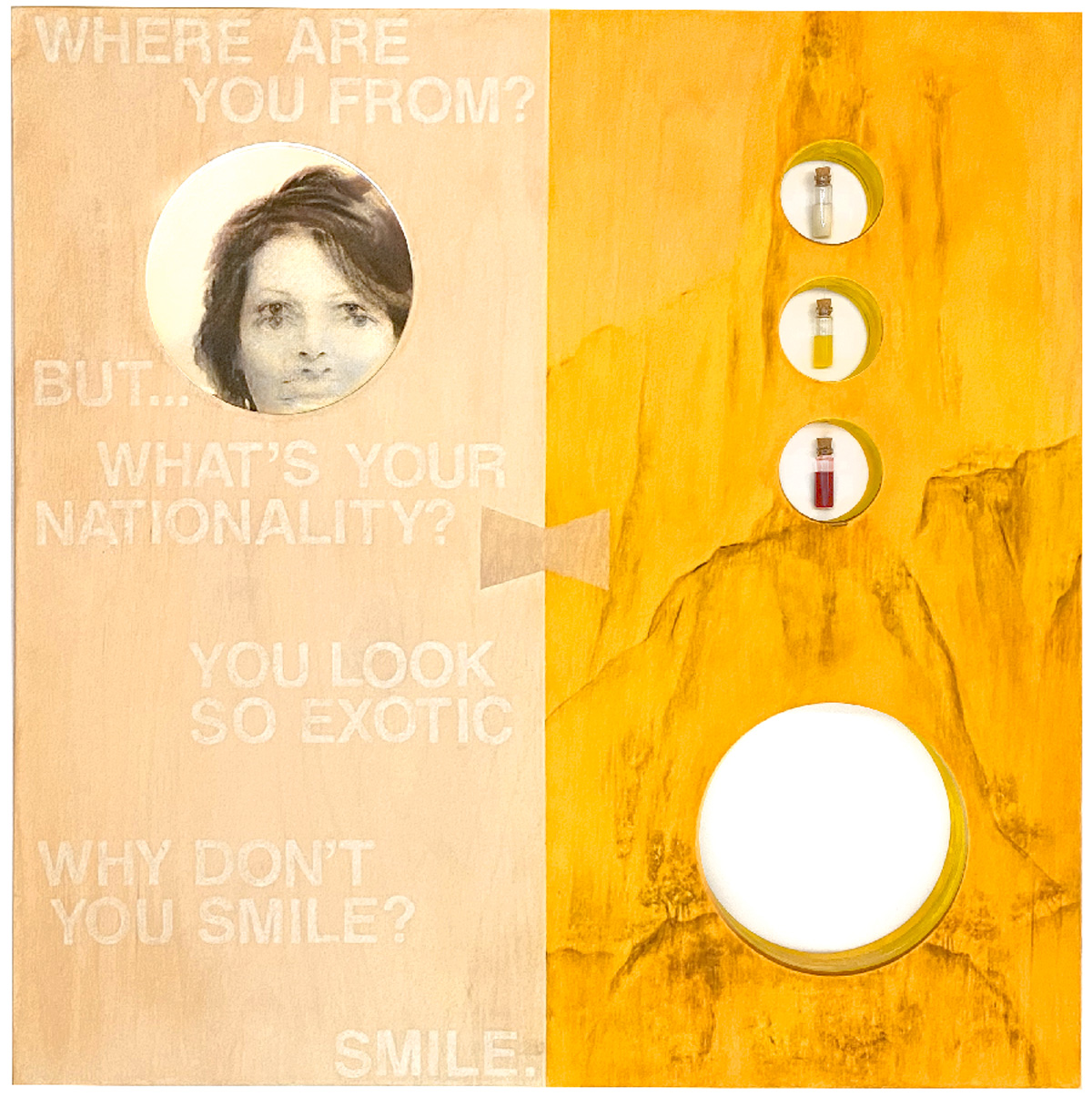
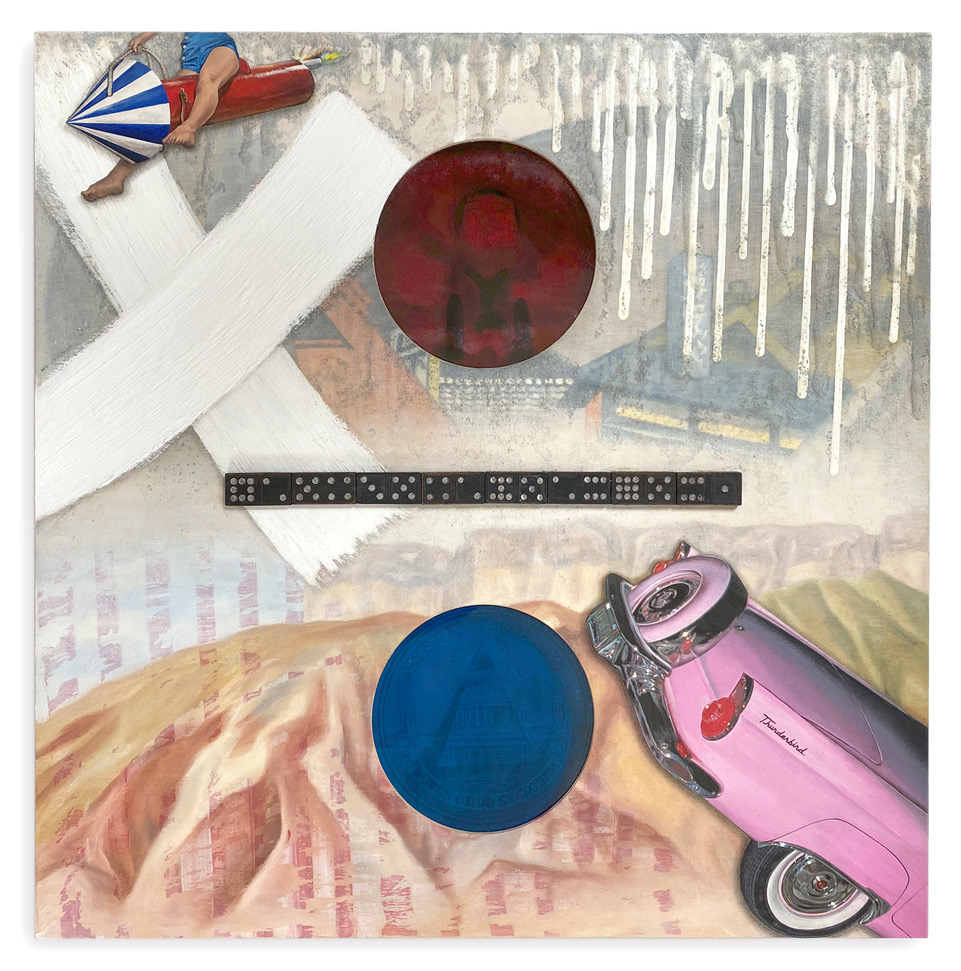
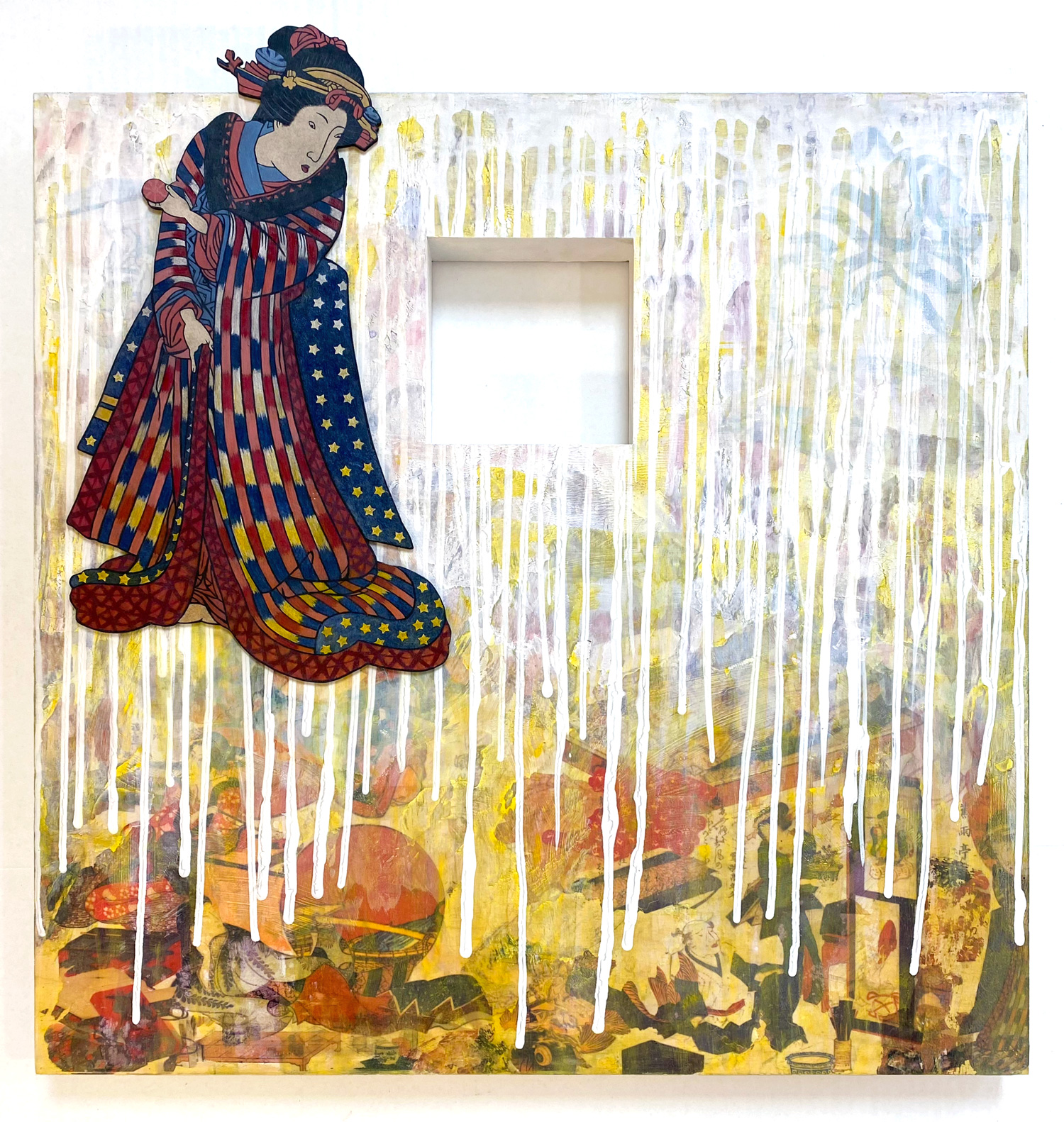
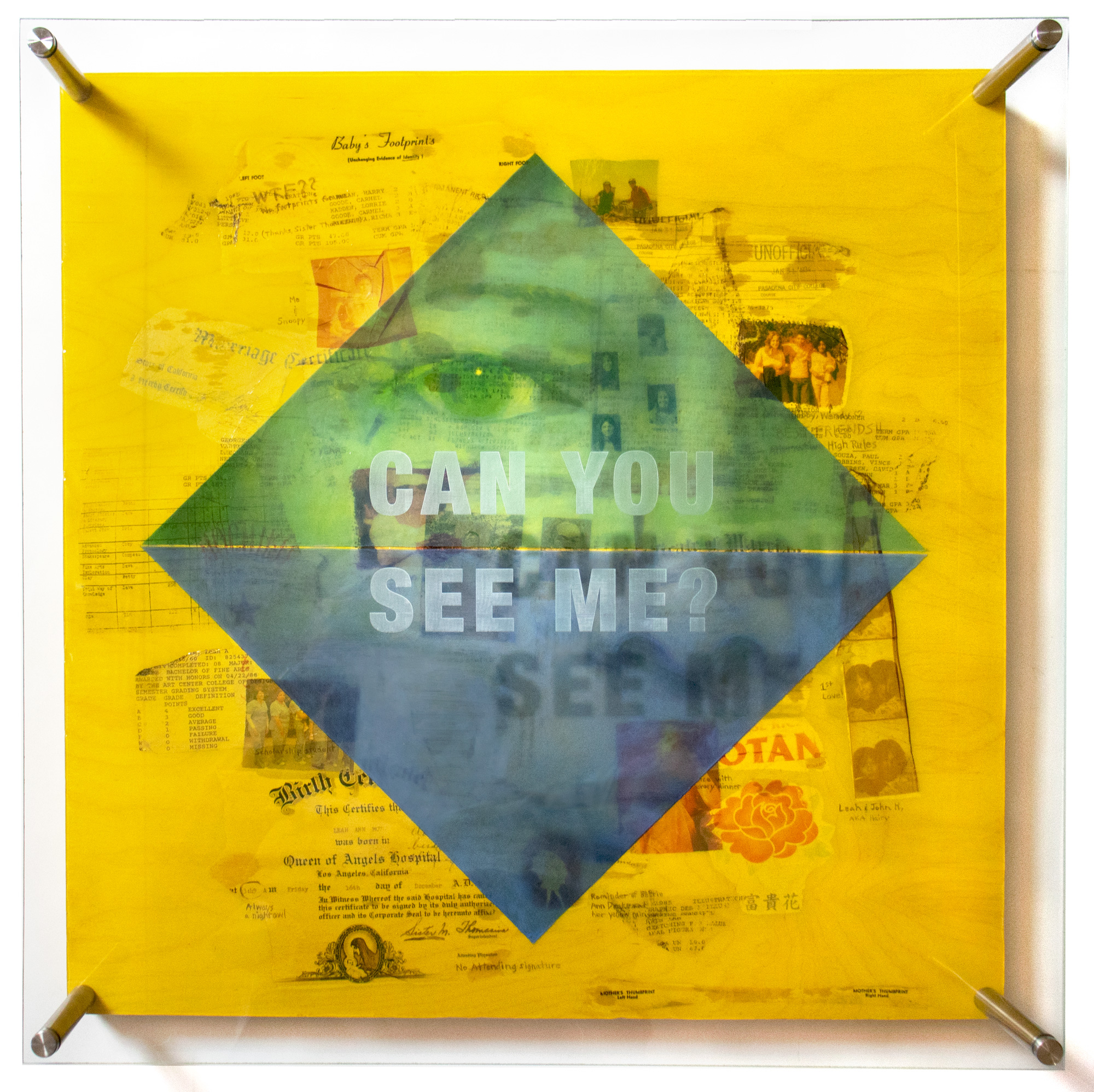
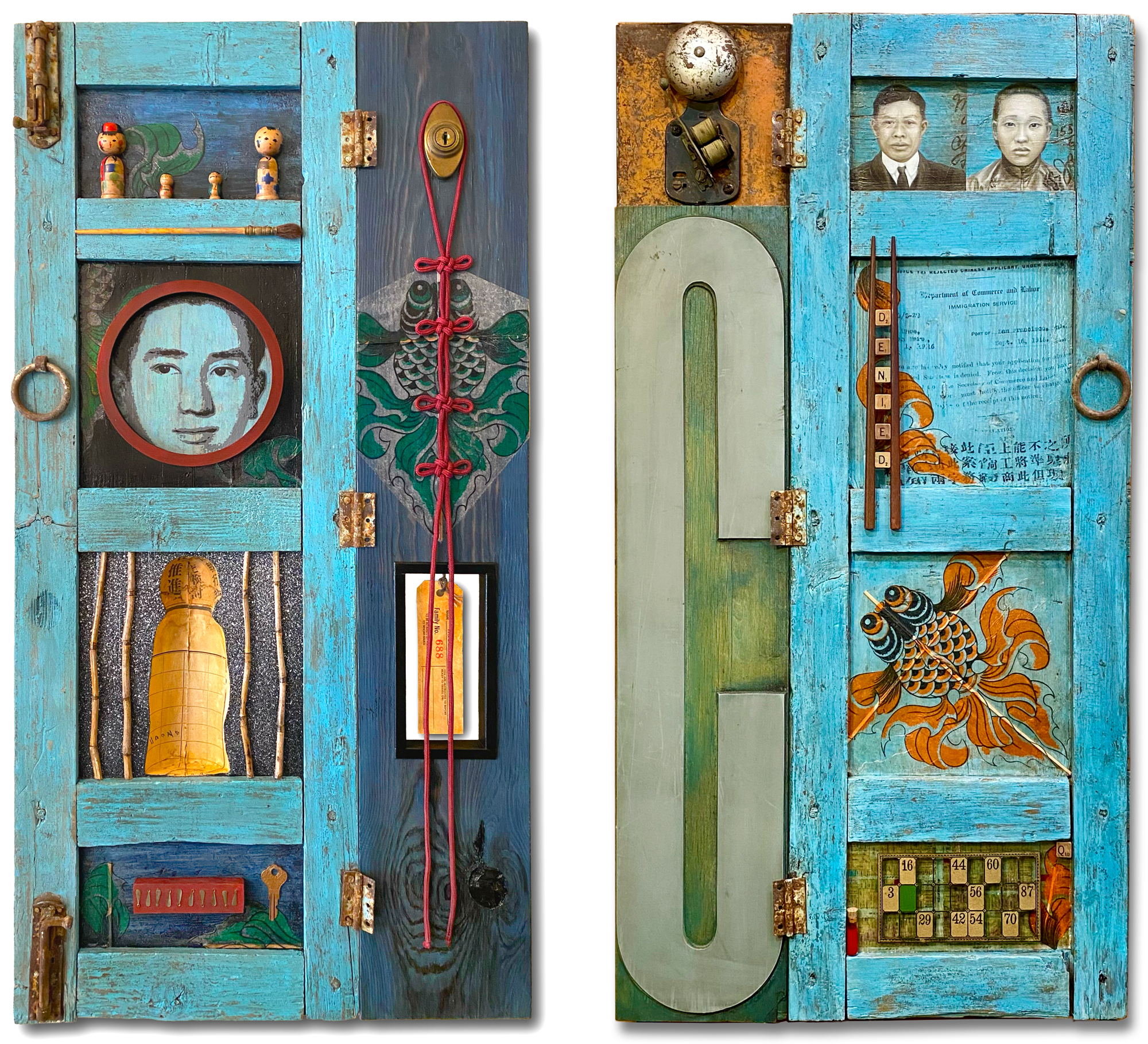
This exhibition continues an ongoing series examining Asian biracial identity, racism, and the impact of historical events. Through multi-layered wall works and sculptural assemblages constructed primarily from reclaimed vintage windows and doors, the work explores themes of belonging, exclusion, and oppression.
Resin transparencies create depth and shifting reflections, while vintage ephemera provides context. Many pieces transform as viewers move through the space, revealing changing perspectives and layered narratives. The visitor is greeted by more colorful works about micro-aggressions and identity, and progressively becomes more somber.
Created in response to the current climate surrounding immigration, the exhibition examines the consequences of anti-immigrant rhetoric and fear-based propaganda. By referencing the incarceration of Japanese Americans during World War II, including U.S. citizens, the work draws parallels between past and present, encouraging reflection on how prejudice can become policy and how easily history can be forgotten.
(You can hear short audio narratives for each piece here.)
(Individual works below)
“The task of the artist is to make the human being uncomfortable.”
Lucian Freud
In her conceptually complex and rigorously researched solo exhibition, “Progression,” bi-racial artist Leah Knecht dissects and illuminates the brutality of both overt and covert anti-Asian discrimination that is endemic to California’s history from the 1800’s to the present day. Thoughtfully installed and meticulously crafted, the artist merges personal and collective stories to create deeply affecting works seen through a very personal lens.
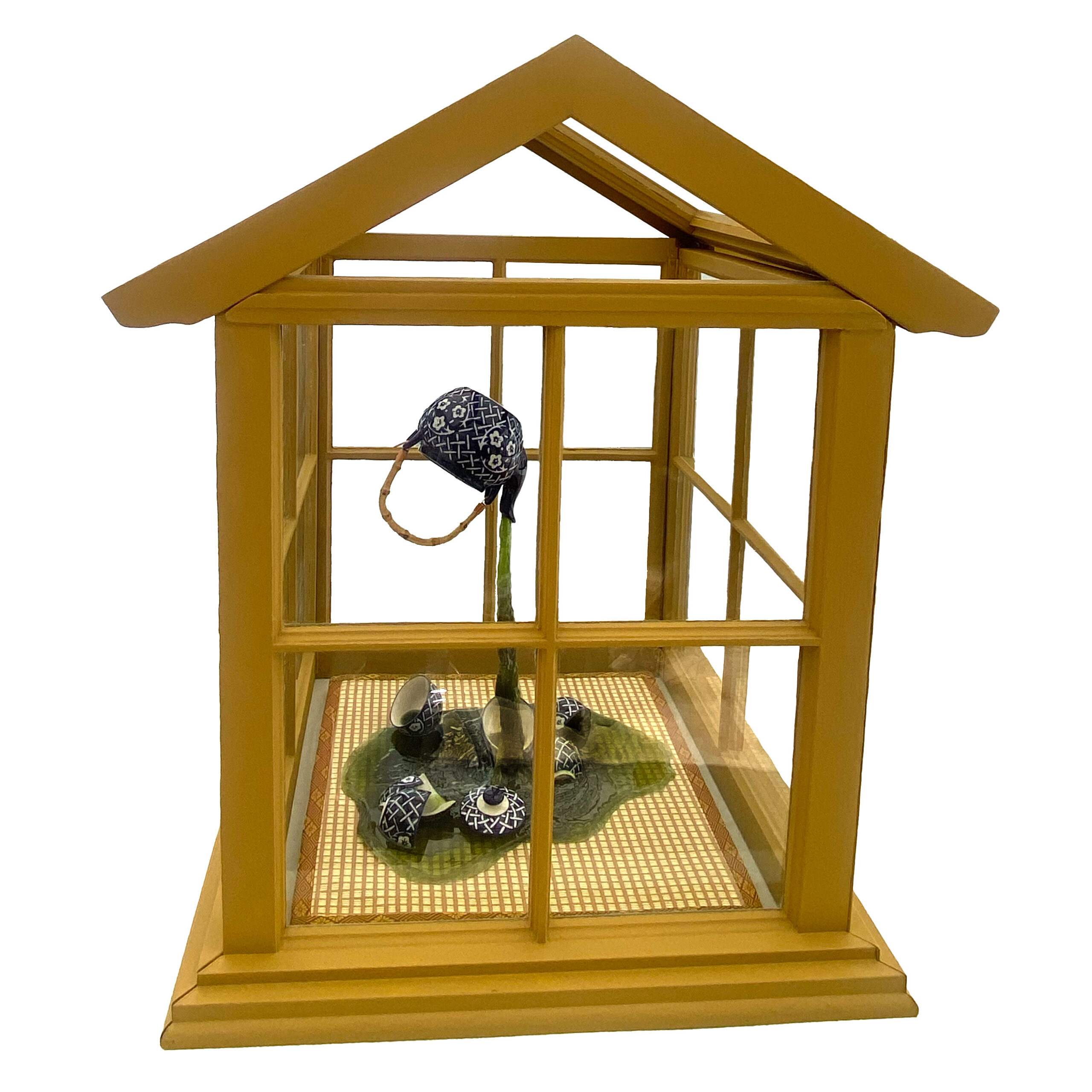
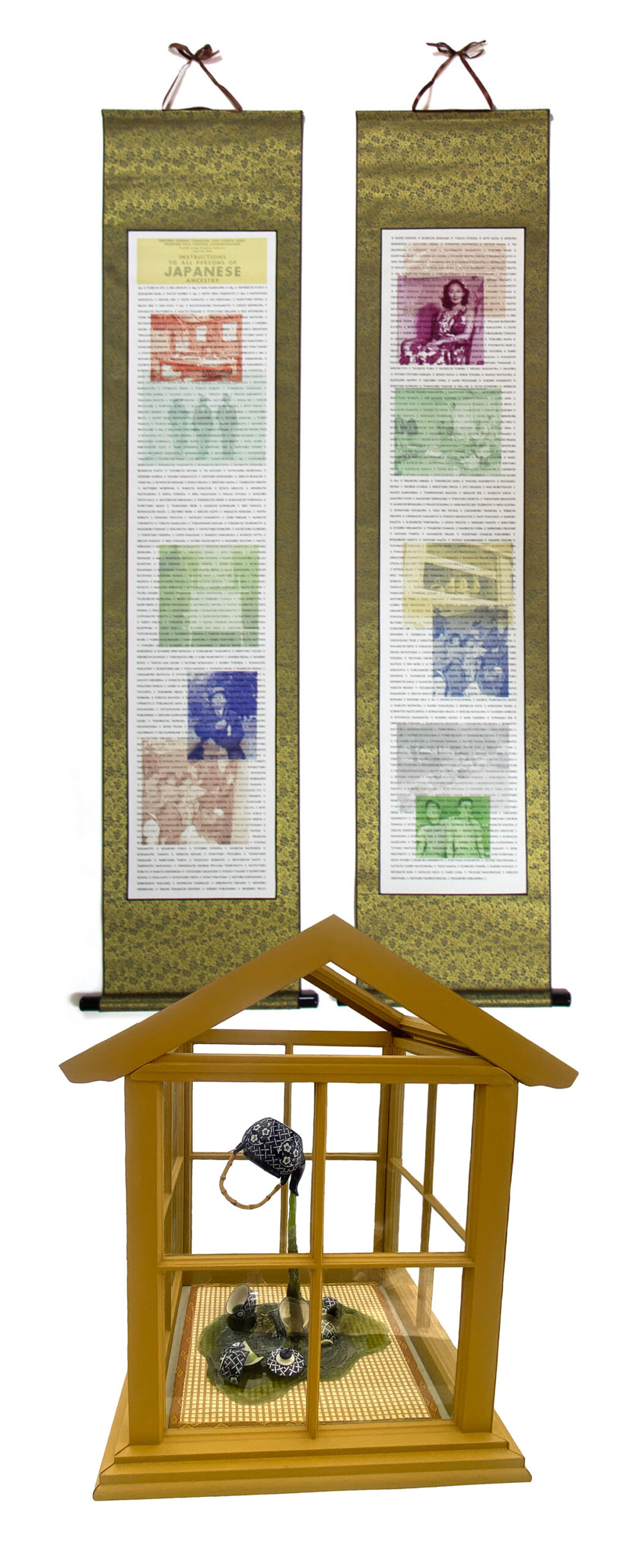
With remarkable delicacy and restraint, Knecht incorporates objects such as a ceramic teapot and smashed cups that poetically evoke both violence and disruption of cultural norms such as the venerated ritualistic Japanese tea ceremonies. Situated in a wooden tea house with no walls, this piece elegantly speaks to vulnerability and loss. Hanging above this work are two scrolls with the names, images and stories of families who were wrongfully incarcerated during World War 2, literally putting a face on distant historical wrongs.
Using salvaged wooden windows and doors to serve as frames for images of ancestors or as structures to hang keys, Knecht creates a liminal space, a fluid boundary or threshold. Both windows and doors can be opened or closed, becoming a metaphor for inclusion and exclusion. Through these architectural elements associated with “home” as a safe place, Knecht creates mixed media sculptures that speak to the complexities of a dual cultural identity and the fraught experience of moving between two worlds.
Knecht’s use of transparent plexiglass onto which she layers photographic transfers, together with images encased in resin, is a compelling psychological strategy. These clear materials allow viewers to see reflections on the surface while glimpsing ghostly shadows on the white gallery wall. Resin, much like amber, preserves but also entraps. Here the medium is the message, a representation for confinement.
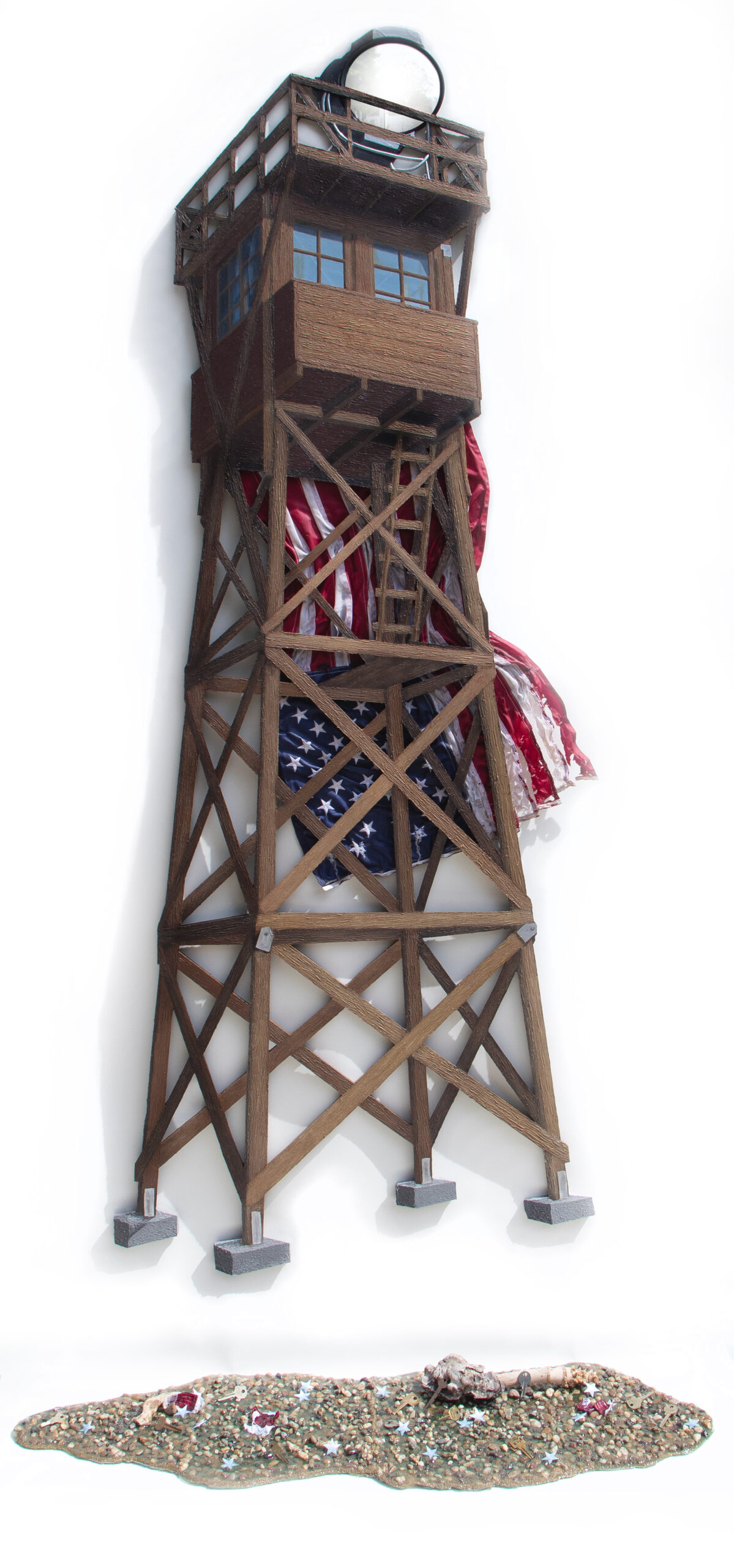
Knecht employs both representational and symbolic strategies throughout the exhibition giving form to formless fears and shame. While one work presents a stark recreation of a guard tower looming over viewers, another features a vintage suitcase with a glowing “EXIT” sign affixed to it. The suitcase, here emblazoned with stickers that name the camps, recalls the very limited luggage these families were allowed to bring with them. Each sculpture highlights the irony that people were confined in camps from which there was no exit.
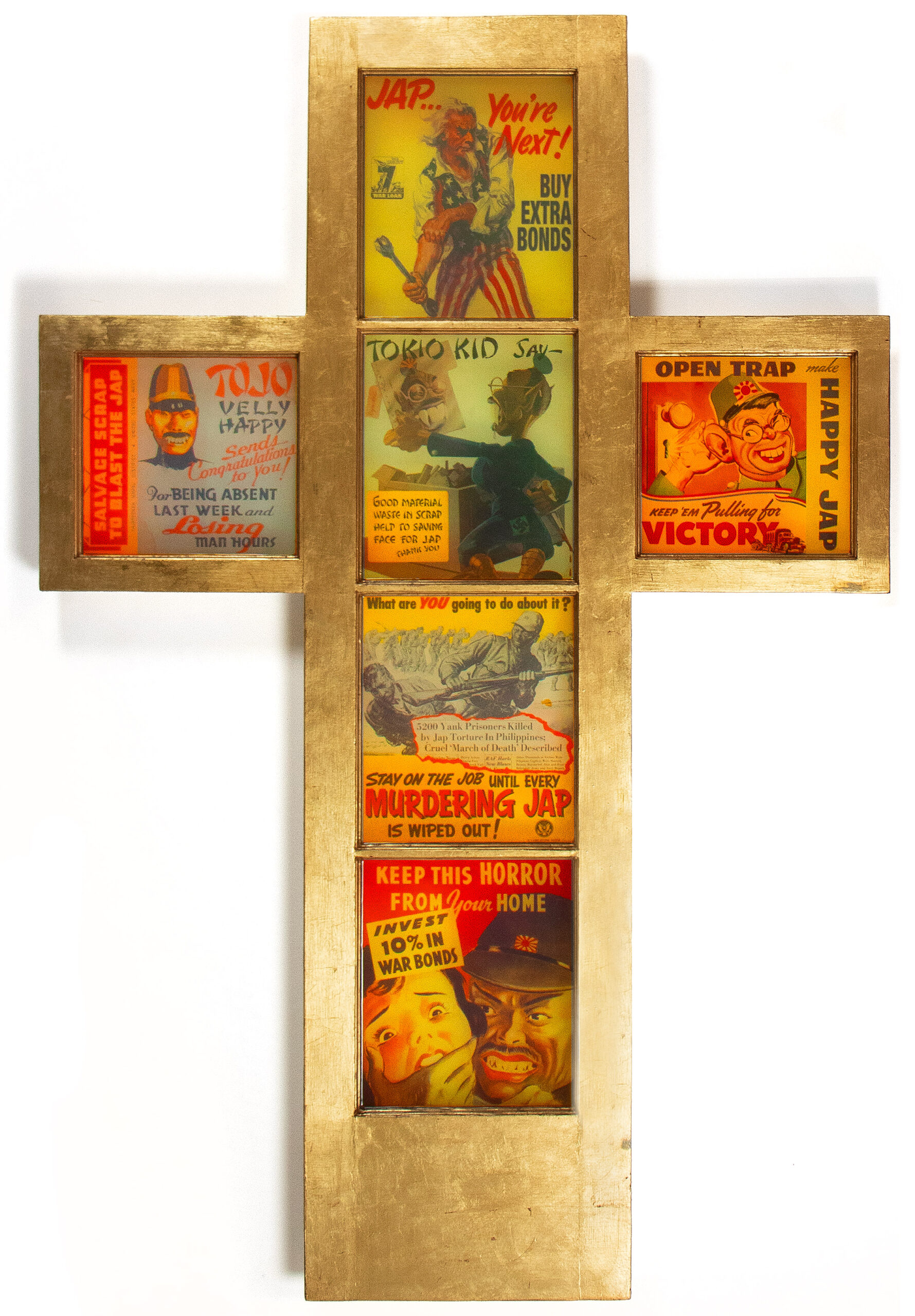
Scapegoating is a universal technique used in all countries to paint some ethnic, religious or national group, usually immigrants, as the “other.” Knecht, in her most damning piece, highlights this practice. Placing rabid, garish stereotypic depictions of Japanese people from actual propaganda posters circa World War 2, into a framed gold leaf wooden cross, Knecht directly addresses the complacency and/or collaboration of the church. Without being didactic, Leah Knecht’s vibrant sculptures illuminate both literally and figuratively a dark stain on our history, reminding viewers of the iconic oft quoted saying by George Santayana “Those who cannot remember the past are condemned to repeat it.”
Nancy Kay Turner
Pasadena, CA.